The Jewelry Size Card Kit
The Pierceable kit for measuring the jewelry that already fits a healed piercing, reading any listing in millimetres, and ordering the right size once
Pierceable's Gauge Size Converter names a thickness, the Jewelry Size Calculator a length and the Ring Diameter Calculator an inside diameter. A listing names all three at once, in a mix of gauge, millimetres and inch fractions, and none of the calculators reads a listing. Stock sizes are coarse, too: rounding a length to the nearest stock bar rounds it down 89 times in 201. This kit turns what you measure on the jewelry that already fits a healed piercing, and the depth or reach your piercer measured, into one size card, then checks any listing against it. In the worked example a 1.21 mm bar is 16g, a 6.4 mm depth calculates to 7.4 mm and orders an 8 mm bar (the nearest would have been 7 mm), and of four listings for a 16g labret one fits: 1/4 in is 6.35 mm, too short; 3/8 in is 9.53 mm, longer than the card; a 14g bar is the wrong wire. A helix hoop orders 9 mm where the nearest said 8, and a 14g septum ring with an 11 mm inside is 14.2 mm outside. A reading of 1.1 mm, the exact midpoint of 18g and 16g, stops you instead of guessing. Every worked figure is an example, computed with our calculators' formulas; your own calipers and listings replace them. The kit is for healed piercings and adults buying for themselves, and says nothing about healing, aftercare or stretching: a professional piercer (an APP member) and, for signs of infection, a doctor decide those. Included: 23 printable pages, seven steps in two parts, a size card, a listing check, a jewelry inventory, reference tables and a quickstart, plus a personalised sheet worked out from the numbers you entered in our calculators.
Look inside
Two full pages from the kit, exactly as printed. Click either to read it at full size before you decide.
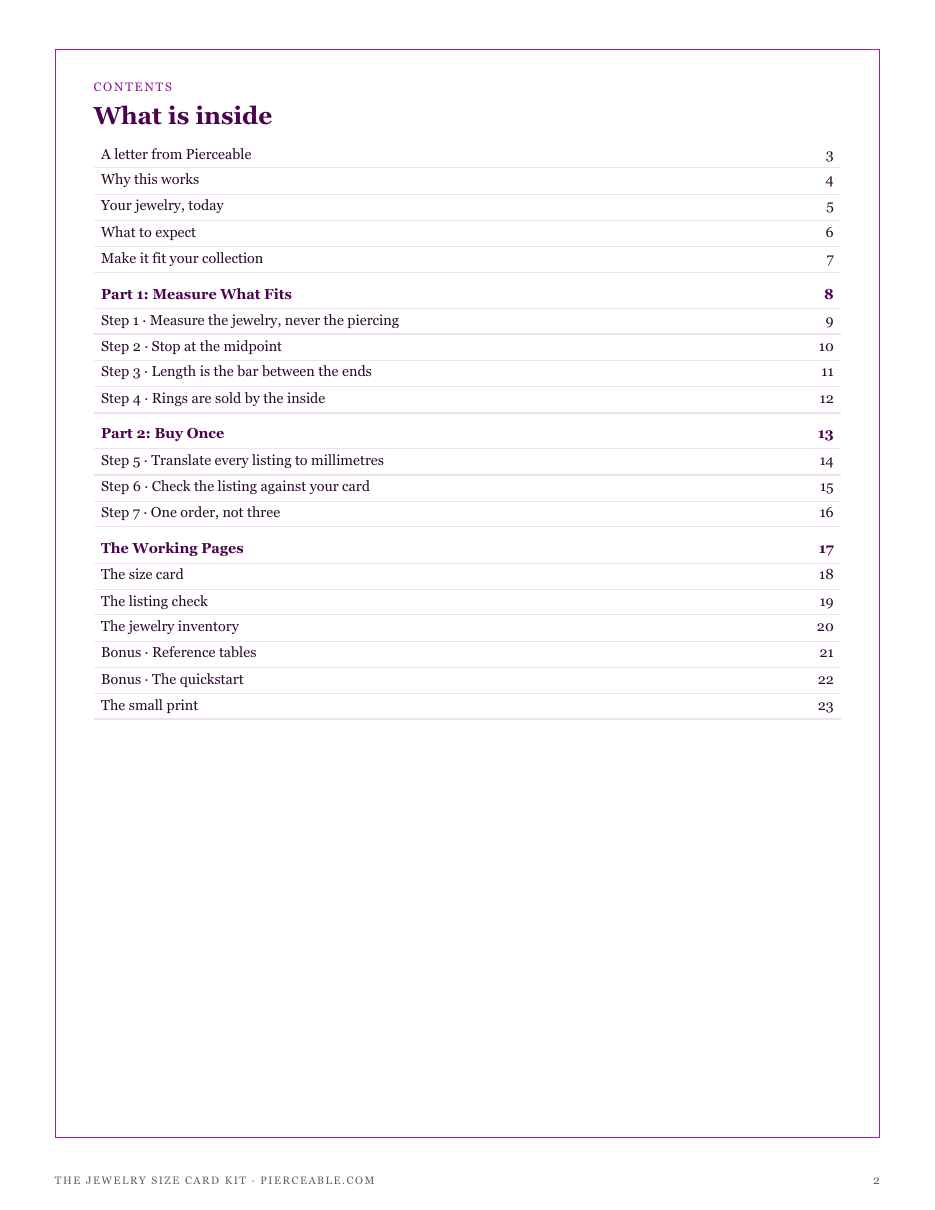
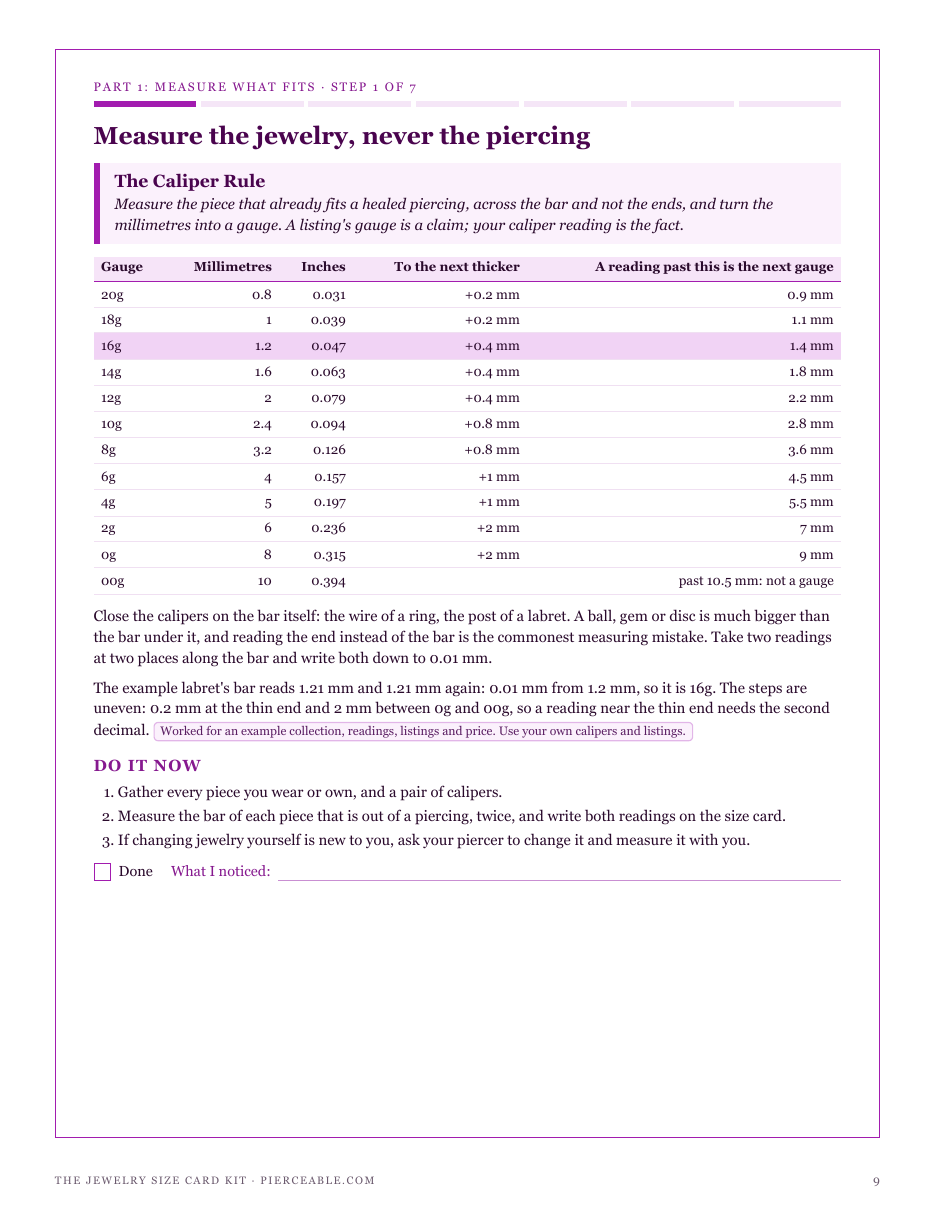
What is in it
- The Caliper Rule: measure the bar of the piece that already fits, and the gauge ladder from 20g to 00g in millimetres and inches
- The Midpoint Rule: the band around each midpoint where a reading is too close to call, and what past 00g means
- The Round-Up Rule: bar length from a piece that fits or a piercer's depth, rounded up to the next stock length, never the nearest
- The Inside Rule: ring size by inside diameter, rounded up, with the outside diameter at your gauge
- The Millimetre Rule: every inch fraction and gauge on a listing converted, and where they miss the metric bars
- The Card Check: a listing fits, is too short, is longer than the card, or is the wrong gauge
- The One-Order Rule: one size from the card instead of three bought to be safe, measured again on arrival
- Working pages: a size card, a listing check and a jewelry inventory
- Reference tables: stock lengths and inside diameters in inches, outside diameters by gauge, and depth to order
- A quickstart that closes the loop on your three scores, and a personalised sheet on your own figures
- ✓ 23 printable pages
- ✓ 10 sections, worksheets and templates
- ✓ A second PDF worked out from the numbers you enter
- ✓ No account needed, just an email address
- ✓ Instant download; link valid 7 days
Price includes any taxes. Sold by GrabURL, who handle checkout and support. The charge appears on your statement as GrabURL.
The kit picks up where the free Gauge Size Converter leaves off. The converter names a thickness, the Jewelry Size Calculator a length and the Ring Diameter Calculator an inside diameter; the kit turns what you measure on the jewelry that already fits a healed piercing into one size card, stops you at a midpoint between gauges, rounds lengths and rings up instead of to the nearest, reads any listing in millimetres and checks it against the card before you pay. The worked figures are examples; your own calipers and listings replace them. It is for healed piercings and adults buying for themselves, and says nothing about healing, aftercare or stretching: a professional piercer (an APP member) and, for signs of infection, a doctor decide those.